Camping in Georgia State Parks: Where to Start and What to Expect
Planning a state park camping trip can feel harder than choosing a destination: campsite types differ, listings leave questions, and the right setup depends on your gear and comfort level. Georgia’s parks offer a broad mix of places to stay, but a smooth trip starts with matching your needs to a specific site and checking the details before you reserve. Here’s how to get oriented and what to expect.
Start With the Kind of Trip You Want
The easiest way to begin is to think about the experience you want, rather than trying to compare every park at once. Are you looking for a campsite you can drive into with an RV, a place to pitch a tent near your car, a more basic backcountry night, or a roof over your head? Are you planning to spend most of the trip outdoors, or would you rather have a comfortable base for short outings?
Georgia’s state parks cover a range of camping styles. Forty-one parks offer more than 2,700 campsites, according to the Georgia Department of Natural Resources. That breadth is useful, but it also means the phrase “camping at a state park” can describe very different stays. A developed campground with vehicle access is not interchangeable with a primitive site reached on foot, and neither is the same experience as a cabin or yurt.
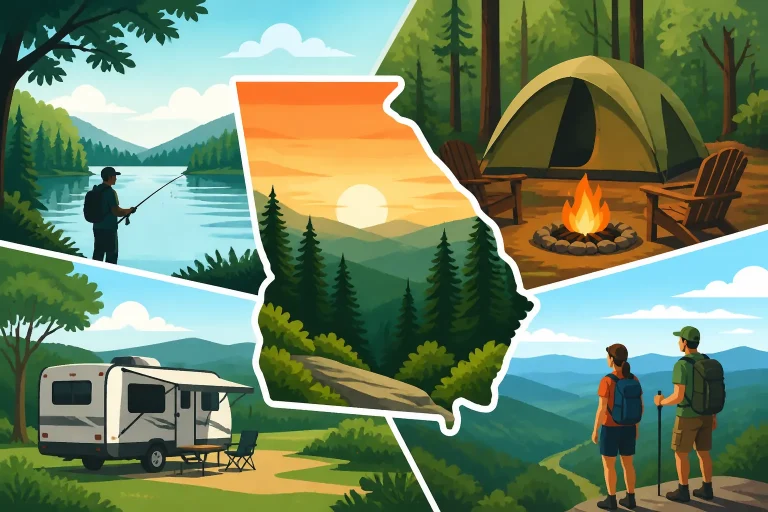
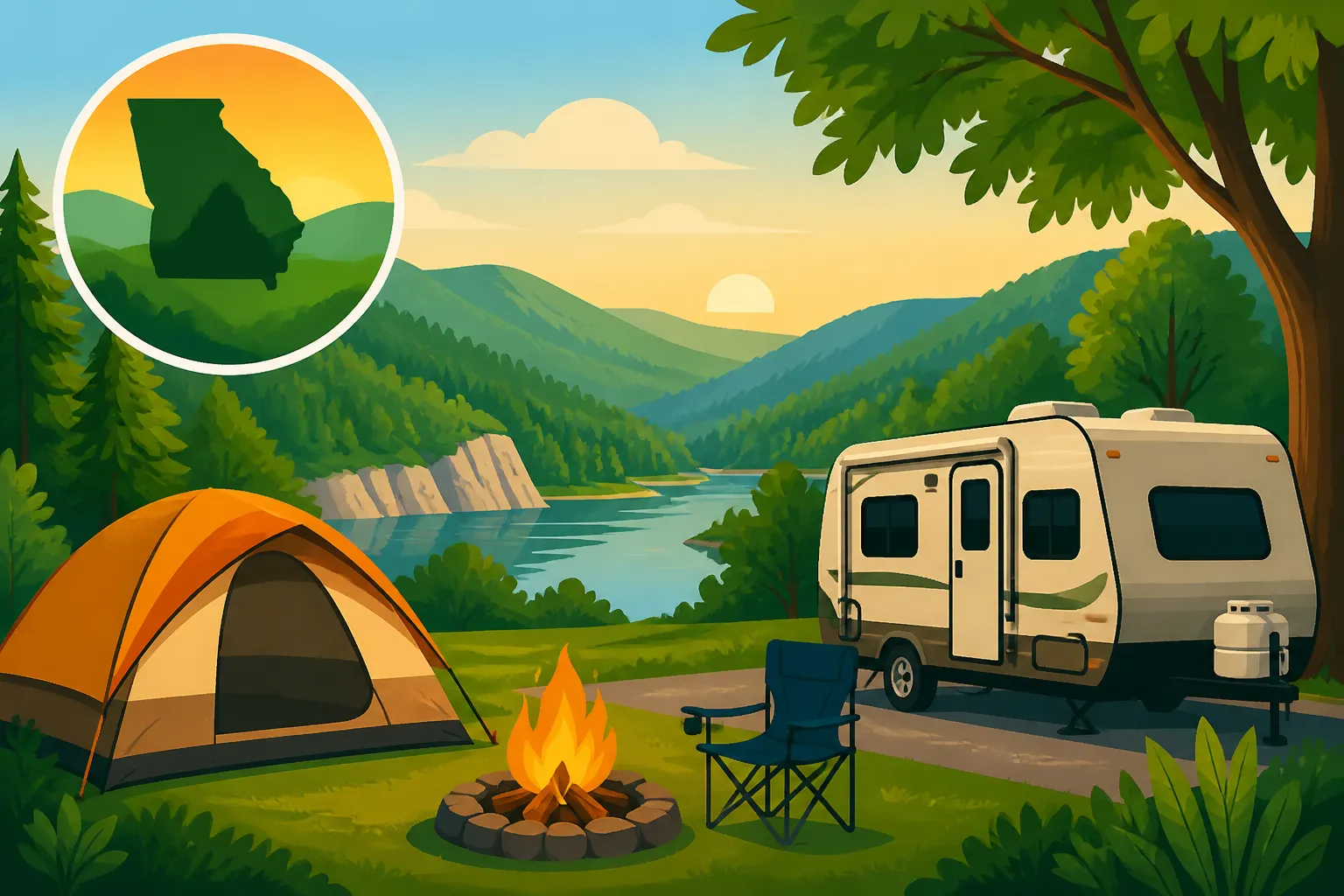
The Georgia Department of Natural Resources describes campsite choices as tent-only areas, RV pull-thru sites, primitive camping and group camping areas. The agency also notes that visitors may choose developed or primitive campsites, while others may prefer cozy cabins. Park options can include developed and primitive campsites, cabins, yurts, and lodge rooms, so you can choose how much of the camping experience you want to take on.
Start by deciding what matters most:
- Ease of setup: Do you want to unload close to your sleeping area, or are you comfortable carrying equipment farther?
- Sleeping arrangement: Are you bringing a tent, an RV, or no camping shelter of your own?
- Comfort needs: Do you need access to particular facilities, or are you prepared to camp with fewer amenities?
- Trip companions: Are you traveling with children, a dog, a larger group, or someone who needs an accessible space?
- Activities: Is your goal to spend time on trails, around a lake, or simply relaxing at camp?
- Flexibility: Would you rather choose a particular site, or are you open to alternatives if your first choice is unavailable?
It helps to answer these questions before opening a booking page. Otherwise, attractive photos or a familiar park name can pull you toward a site that does not fit your equipment or your group.
If this is your first overnight visit, Sorting Out the Basics Before a First Georgia State Park Weekend can help you organize the broader decisions. For a wider overview of lodging, see Campsites, Cabins, Yurts and Lodges: Sleeping Over in Georgia.
Choose a Park That Fits Your Plans
A park’s name alone does not tell you whether it fits your trip. Consider the drive, the type of setting you want, the activities you plan to do, and the lodging or campsite options actually listed for your dates. Some travelers want an easy place to relax after arriving; others are happy to trade convenience for a more secluded or active outing.
Think about the setting that will make the trip enjoyable. A lake park may suit a group hoping to spend time near the water, while a mountain setting may better match a trip built around hiking and cooler evenings. These are starting points, not guarantees about conditions or amenities. Check the specific park’s information for available activities, facilities, access details, and any closures or advisories that could affect your plans.
Next, consider the practical side of the journey. A remote-feeling campsite may appeal to you, but the approach, parking arrangement, or distance from your vehicle may be inconvenient with bulky gear. If you are towing, driving a large RV, or traveling with someone who has mobility needs, pay particular attention to the site’s access information instead of assuming that all developed sites are equally easy to reach.
Availability matters too. The park you have in mind may not have the right site for your dates, or the option that suits your group may already be taken. It is useful to identify alternatives before you commit to a plan. A nearby park with the right site type may be a better choice than forcing your trip into a campsite that does not fit your setup.
A simple comparison can keep the choice grounded:
| What matters to you | What to look for in the park information | Why it matters |
|---|---|---|
| A particular landscape | Park setting and available outdoor activities | Helps the destination fit the kind of trip you want |
| Tent camping | Whether the site is tent-only, developed, walk-in, or primitive | Tells you what to expect when carrying and setting up gear |
| RV travel | Site layout, access, and equipment suitability | Helps prevent a mismatch between your rig and the site |
| Group travel | Group-camping options and stated capacity | Makes it easier to choose a site intended for your party |
| Accessibility | Accessible features and route details | Helps you check whether the full stay is workable |
| A roofed stay | Cabin, yurt, or lodge availability | Offers an alternative if tent or RV camping is not right |
| A particular travel date | Available inventory and reservation conditions | Confirms that the preferred option can actually be booked |
For help narrowing the destination itself, use Choosing a Georgia State Park That Fits Your Kind of Trip. If you are weighing a lakeside setting against a mountain one, Lake Park or Mountain Park? Choosing a Georgia State Park Setting can help focus the comparison.
Do not assume that a park’s general description covers every campsite. Individual sites can differ in layout, access, and nearby facilities. When a detail could affect whether your trip works, look for it in the site-specific information or ask the park office through its current official contact details.
Match the Campsite to Your Equipment and Comfort Level
A good campsite is not just a place to sleep. It has to work with your shelter, vehicle, cooking setup, group size, and tolerance for carrying equipment. Read the site description closely and check details before you book, especially if you have an RV, a large tent, or gear that is awkward to move.
Tent sites
“Tent camping” can refer to more than one setup. Some sites are intended for tent use, while others may share a campground layout with vehicle or RV sites. Some are close to a vehicle; others may require a walk with equipment. Confirm how the specific site is described, where you can park, and what the route between parking and the tent area is like.
Think about your shelter footprint, not just the number of people sleeping in it. A tent may fit the listed pad but leave little room for extra gear, or the site may have a layout that makes a particular tent shape inconvenient. Check the measurements and site notes where available. For more on site categories, see Tent, RV, Walk-In or Backcountry? Georgia State Park Campsite Types and Sizing Your Tent to Fit a Georgia State Park Campsite’s Tent Pad.
RV sites
For an RV, the most important questions are whether the site suits your vehicle and whether the access is manageable. A pull-through layout can be helpful for some travelers, while a back-in site may suit others. Neither label guarantees that every rig will fit easily. Consider your total equipment, including a tow vehicle or trailer, and check the specific listing rather than judging from a campground map alone.
Do not treat “RV site” as a promise of a particular hookup arrangement. Check what the listing says about available utilities and whether the site suits your equipment. If the information does not answer a question that could affect your stay, ask the park before you reserve. Matching Your RV to a Georgia Campsite: Fit, Hookups and Access offers a closer look at the questions worth resolving.
Walk-in and primitive sites
A site reached on foot can offer a different kind of stay, but the walk changes what you should pack and how you organize it. You may need to carry water, food, shelter, and cooking equipment from your vehicle or a trailhead. The exact arrangements vary, so confirm the route, site details, and available facilities with the park information.
Primitive camping can be appealing if you are comfortable bringing what you need and managing with fewer developed amenities. It is not simply a developed campsite with a longer walk. Before choosing it, consider how you will handle drinking water, food storage, waste, lighting, weather, and basic first aid. Check what the park provides and what you must bring rather than assuming a facility is nearby.
For more on this style of stay, see Primitive and Backcountry Camping in Georgia State Parks: A Guide. If a park describes a site as hike-in or backcountry, check how to reach it and whether any additional arrangements or rules apply.
Group sites
Group camping can make it easier to bring a larger party together, but it is worth checking the site’s capacity and setup before everyone commits. Ask how the sleeping area is arranged, what facilities are available, whether the group needs to bring its own shelters, and how the site is accessed. Group sites may not have the same features as individual campsites, so avoid assuming that the standard campground description applies.
A group leader can reduce confusion by collecting the main details in one place: the reservation information, directions, what each person is bringing, how food will be handled, and what the group needs to know about park rules. If you are comparing group options, Group Camping at Georgia State Parks: Pioneer Sites and Group Camps is a useful next read.
Cabins, yurts, and lodge rooms
You do not have to own camping equipment to sleep overnight in a state park. Cabins, yurts, and lodge rooms offer alternatives, with different levels of comfort and different things to plan for. Their furnishings, kitchens, bathroom arrangements, heating or cooling, and sleeping capacity can vary by property. Read the listing for the exact unit rather than generalizing from another park’s lodging.
A roofed stay still takes preparation. Find out what linens, cookware, towels, or other supplies are provided, and what you need to bring. Check the arrival instructions, parking arrangements, pet rules, and any stated capacity requirements. Cabins and Cottages in Georgia State Parks: Sizes, Kitchens and Extras and Yurt Camping in Georgia State Parks: Amenities, Rules and Which Parks explain how to compare these options.
Understand Reservations, Costs, and Park Access
Once you have a park and a suitable site in mind, check the reservation details carefully. The booking system is where you confirm availability and review the conditions attached to a particular stay. Before you submit a reservation, make sure the dates, site type, equipment details, and party information all match your plans.
A useful approach is to treat each listing as a site-specific offer rather than a general promise about the whole campground. A campground might have several types of sites, while only some work for your tent, RV, or group. Check the description, map, capacity information, access notes, and the terms shown during booking. If a key detail is missing, ask the park before relying on an assumption.
When reviewing a reservation, look for:
- The exact park and campsite or lodging option.
- The stay dates and any minimum-stay condition shown for those dates.
- The site’s stated capacity and permitted equipment.
- The arrival instructions and any late-arrival procedure.
- The payment, change, and cancellation terms presented by the booking system.
- Any additional park-access or vehicle information that applies to your visit.
Do not assume a campsite reservation answers every question about vehicle access or park entry. Read the reservation information and the park’s current access details together. For guidance on the parking pass, see The ParkPass, Explained: Daily and Annual Passes for State Parks and Does a Georgia Campsite Reservation Include a ParkPass?. For current amounts and how charges are applied, check the official information before you finalize your budget; costs and terms can change.
It can also help to check the reservation system before you settle on travel plans. If your preferred site is not available, compare nearby parks or consider whether another site type would suit your group. A cabin may solve a gear problem, while a developed tent site might be a better fit than a primitive site if you want convenient access to facilities. Avoid booking a substitute that sounds close enough without checking its details.
If your first choice is unavailable, Your First-Pick Georgia State Park Is Full: Finding an Alternative offers ways to reconsider the destination and stay type. For the booking process itself, see How to Book a Georgia State Park Campsite, From Account to Check-In.
Prepare for the Stay, Not Just the Drive
Packing well begins with the site description. A developed campsite, a walk-in site, an RV space, and a cabin call for different gear. Use the park listing to separate what is provided from what you need to bring, then make a list based on the activities and weather you expect.
For tent camping, think in layers: shelter, sleeping gear, clothing, lighting, cooking equipment, food storage, water, and a way to keep wet or dirty items apart. Test your tent and sleeping setup at home if you have not used them recently. Confirm that the tent is appropriate for the site dimensions and that you have the stakes, lines, and tools needed to set it up.
For RV camping, check the site’s utility information and your own equipment before leaving. Make sure you know how your vehicle will approach and fit the site, and bring the supplies needed for the facilities actually available. A booking confirmation is not a substitute for verifying that the site fits the RV and the way you travel.
For walk-in or primitive camping, reduce unnecessary weight and plan how you will carry supplies. Separate essentials from optional comfort items. Think through water, meals, waste, navigation, weather protection, and what you would do if your plans changed. A route that looks short on a map can feel more demanding with a loaded pack, especially in poor weather.
For a cabin or yurt, start with the listing’s inventory and rules. Bring only what is missing, but do not assume that another unit at another park has the same furnishings. The same caution applies to heating, cooling, kitchen equipment, bedding, and outdoor cooking facilities. If a comfort or accessibility feature is essential, confirm it before traveling.
Use A Packing List for Your First Georgia State Park Campout as a starting point, then tailor it to the exact site. It is also worth organizing important information where your group can find it: the reservation confirmation, directions, arrival instructions, and contact details from the official park information.
Food, waste, and wildlife awareness
Food planning is about more than meals. Think about how food and scented items will be stored, what you will do with trash, and what the park requires at your particular campsite. Do not infer food-storage rules from another park, another type of site, or a general camping habit. Check the applicable park information and follow posted instructions.
Pack food in a way that makes it straightforward to keep your camp tidy. Keep cooking supplies organized, clean up promptly, and dispose of waste according to the park’s directions. These habits reduce mess and help keep wildlife from being attracted to camp. For specific guidance on what counts as an attractant and how food should be secured, see Storing Food and Scented Items at Georgia Campsites: A Full Guide and What Counts as a Bear Attractant at a Georgia Campsite?.
Fire and changing conditions
Do not assume that a campfire or outdoor cooking setup is allowed in every situation. Restrictions can change with conditions, and the applicable instructions may depend on the park or site. Check the official park information before you leave and again when you arrive. Follow posted notices and ask park staff if a rule is unclear.
Bring a backup way to prepare food if your plan depends on an open fire, and do not pack firewood without first checking what the park allows. Checking Campfire Restrictions at a Georgia State Park the Week You Go explains what to verify. The key is to make decisions based on current official instructions, not on what was allowed during a previous visit.
Weather also affects what a site feels like. Rain can change how you manage a tent, muddy equipment, and access routes. A cool night can make bedding feel inadequate even when the daytime forecast is comfortable. Review conditions close to departure and pack for changes rather than just the most pleasant part of the forecast.
Arrival, Check-In, and Life at the Campsite
Before leaving home, make sure you know where to go and what to do when you arrive. Check the reservation confirmation and the park’s current instructions. Do not assume every campground uses the same check-in process, especially if you expect to arrive late or have a tight schedule.
When you reach the park, follow the signs and instructions for your reserved site or lodging. If you are uncertain about your site location, parking, or a posted rule, ask the park staff using the official contact details. It is better to clarify early than to unpack and discover that the site does not match your equipment or the instructions.
Once at camp, take a moment to orient yourself before setting up. Check the boundaries and layout of your assigned space, identify the route back to your vehicle or facilities, and notice posted information. Keep equipment within the area intended for your site, and avoid blocking shared access. If something appears different from the booking information, contact the park rather than moving to another site without permission.
The Georgia Department of Natural Resources says park rules and regulations are posted at site offices and must be observed by guests and their visitors. That applies to the people staying with you and to anyone who comes to visit. Read the posted information and make sure your group understands it. Rules may cover issues that affect other visitors and the park, such as pets, noise, vehicles, fires, or use of shared spaces. Check the specific park’s rules rather than assuming the details are identical everywhere.
For a cabin, yurt, or other lodging, follow the arrival instructions for that unit and review the property information before unpacking. Ask about anything important that is unclear, such as how to handle a maintenance issue or where visitors may go. Check-In for Georgia Cabins and Yurts: Getting the Instructions can help you plan for a roofed stay.
At camp, a little organization makes the stay more comfortable. Keep frequently used items accessible, make a clear place for food and cooking gear, and keep walkways free of loose equipment. If rain is possible, have a plan for keeping sleeping gear dry. If you are camping with children, agree on where they can play and how they should find an adult if they become separated.
Be considerate of nearby campers. Keep shared areas usable, respect signs and instructions, and avoid spreading gear into neighboring sites. If your group has visitors, check the park’s visitor rules and parking requirements in advance. Good-Neighbor Rules Around Georgia State Park Cottages and Having Friends Over at Your Georgia Campsite: The Visitor Rules cover questions that can otherwise cause confusion.
Make the Trip Work When Plans Change
Even careful planning leaves room for surprises. A site can be unavailable for your preferred dates, weather can make your planned activities less appealing, or your group’s needs can change before departure. A flexible plan helps you adjust without turning a small problem into a stressful trip.
If your booked site no longer seems suitable, first check what changes are allowed under the reservation terms. Do not assume that a change, cancellation, or transfer will work the same way for every reservation. Read the terms shown by the official booking system, and contact the park through its official channels when you need clarification. For more detail, see Changing or Canceling a Georgia State Park Reservation, Explained.
If you arrive and a detail does not match what you expected, pause before making your own adjustment. Contact the park office or follow the instructions posted at the site. That is especially important if you are considering using another campsite, changing your parking arrangement, or setting up equipment outside the assigned area.
It is also sensible to have a backup plan for the parts of the trip most likely to be affected. If rain makes a long outdoor day unappealing, know what low-key options are available at or near the park. If your chosen campsite is not workable for your equipment, have a way to contact the park and understand what your reservation allows. If an activity is unavailable, think about another way to use the setting without relying on a specific facility.
Before leaving home, take another look at official notices and park information. Recheck any conditions that can change, including closures, access instructions, and fire restrictions. Check again when you arrive, because information can change while you are traveling. If an issue affects safety or access, follow the current official directions rather than relying on old plans.
A useful pre-departure check is:
- Confirm the park, site, dates, and booking instructions.
- Recheck that your tent, RV, or other equipment fits the site description.
- Review what the site provides and what you need to bring.
- Check the current park information for access, notices, and restrictions.
- Make sure everyone in your group knows the basic arrival plan.
- Keep a backup option in mind if the preferred site or activity is not workable.
For broader planning, A Rainy-Weekend Backup Plan for a Georgia State Park Trip can help you think through a change in weather, while What Should a First-Time Visitor Ask a Georgia State Park Office? is useful when the listing does not answer an important question.
Frequently Asked Questions
What kinds of camping are available in Georgia state parks?
Options include tent-only areas, RV pull-thru sites, primitive camping, and group camping areas. The available setup differs by park and by site, so check the specific listing before choosing.
Do I need to bring camping equipment?
That depends on your stay. Tent and RV campers generally plan around their own equipment, while cabins, yurts, and lodge rooms offer different furnished arrangements. Check the listing for the exact unit or site to see what is included and what you need to bring.
How do I know whether an RV will fit a campsite?
Review the site description, access details, and equipment information for the specific listing. Consider the full vehicle combination you are bringing, not just the RV itself. If the listing does not resolve a fit question, ask the park before reserving.
Where can I find the rules for my stay?
Check the park’s official information and the notices posted at the site office. Make sure both registered guests and visitors understand the rules that apply to the park and their campsite.
Sources
- Georgia Department of Natural Resources — Camping in Georgia State Parks | Department Of Natural Resources Division (checked November 22, 2026)
- Georgia Department of Natural Resources — Reservations for Cabins, Camping, Shelters & More | Department Of Natural Resources Division (checked November 22, 2026)
- Georgia Department of Natural Resources — Park Rules & Regulations | Department Of Natural Resources Division (checked November 22, 2026)
Disclaimer
This article is for general informational purposes only and does not constitute professional advice. Laws, prices and regulations vary by location and change over time. Consult a qualified professional for guidance on your specific situation. Georgia Camping & RV is not a government agency and is not affiliated with any government agency.